
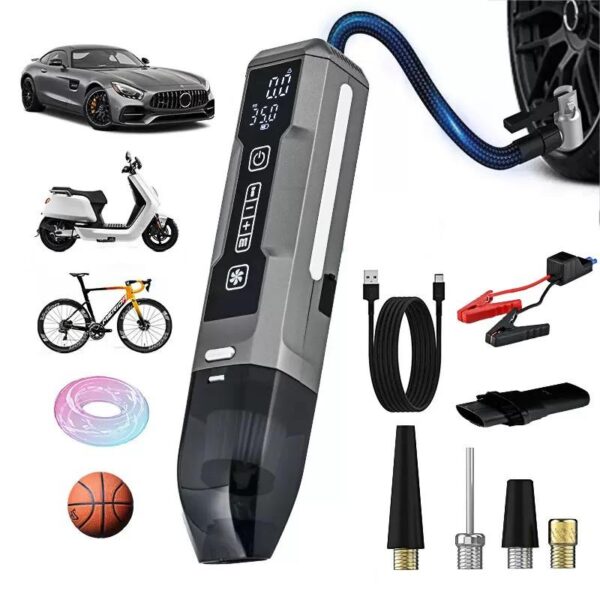
Firaki 6-in-1 Car Jump Starter with Tyre Inflator & Vacuum
₨ 14,999
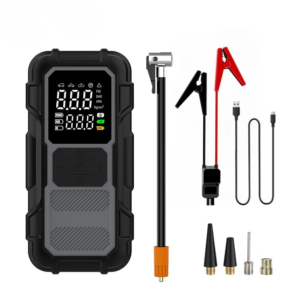
The Firaki 6-in-1 car jump starter with tyre inflator lets you top up a low tyre, clear crumbs from your car interior or give a compatible 12 V car battery a starting boost. This rechargeable 6-in-1 unit combines a jump starter, tyre inflator, digital tyre pressure gauge, cordless vacuum, work light and emergency warning light. Set your target tyre pressure on the display and the compressor stops automatically when it reaches that setting.
Prefer to order manually? Chat with our team. Your order is confirmed only after we verify the details.
A slow crank in the morning, a low tyre before a motorway trip and crumbs around the seat rails each call for a different tool. The Firaki 6-in-1 car jump starter with tyre inflator combines a 12 V battery booster, a 150 PSI air compressor and a cordless vacuum in one rechargeable handheld unit. The digital pressure gauge, work light and emergency warning light give you the controls and visibility to use it in a driveway, parking bay or safe roadside stop.
For routine upkeep, connect the hose to check each cold tyre, then add air where needed. For interior cleaning, switch to the vacuum and use the narrow attachment along the console and under the front seats. Keep the clamp lead with the unit so it is within reach if a compatible vehicle needs a starting boost. The flexible hose and separate attachments let you set up only the parts you need for the job.
6 Functions
1. Give a Compatible 12 V Battery a Starting Boost
If the starter turns slowly or the car will not crank because its battery is weak, the Firaki unit can provide the brief burst of power needed to attempt a start. It connects through the red and black clamp lead, allowing you to try a boost without positioning a second vehicle nearby. Use the jump points specified by the vehicle manufacturer, which may be located away from the battery itself.
Check the vehicle’s starting requirements before purchase, especially for larger petrol engines and diesels. A shared 12 V rating alone cannot establish compatibility. If the vehicle repeatedly needs a boost, have the battery and charging system checked so you can address the cause.
2. Top Up Tyres With the 150 PSI Compressor
The built-in single-cylinder compressor is useful for topping up low tyres at home or before a trip. Connect the flexible hose, select the required pressure on the display and start inflation. The pump stops when it reaches your target, which is helpful when working through several tyres or when the front and rear require different settings.
The 150 PSI figure is the compressor’s maximum pressure. A car tyre’s normal setting comes from the vehicle placard or owner’s manual. Rated compressor airflow is 20 L/min. Actual inflation time depends on tyre size, the starting pressure and how much air you need to add. With a fitting that matches the valve, the pump can also handle compatible motorcycle and bicycle tyres, sports balls and small inflatables.
3. Read Tyre Pressure Before You Add Air
The digital gauge lets you check a tyre’s existing pressure with the hose attached. Check each tyre individually, since a single low reading may be easy to miss by eye. Take the reading when the tyres are cold and compare it with the recommendation for that axle and load. If the same tyre repeatedly drops below its target, make a note of the reading and have the tyre and valve inspected for a leak.
4. Vacuum Crumbs and Dry Debris From the Cabin
Use the cordless vacuum for the spots that get dirty between full interior cleans. It can pick up loose grit from floor mats, crumbs in seat seams and dust from door pockets. The narrow nozzle reaches along seat rails, beside the handbrake and around cupholders where a wider head can be awkward to manoeuvre.
Work in short passes and empty the dust cup as it fills. A clear nozzle and a clean filter help maintain airflow. Use this mode for loose, dry debris and keep liquids away from the vacuum intake.
5. See Tyre Valves and Connection Points With the Work Light
The built-in work light helps illuminate the immediate area while you attach the hose to a valve or locate the jump points identified in your vehicle manual. It also helps when retrieving a dropped valve cap or finding an adaptor in a dim parking area. Position the unit where the light reaches the task and where the hose or cable can sit without being stretched.
6. Add Visibility With the Emergency Warning Light
Use the emergency warning light as a supplementary signal while stopped safely in low visibility. It can make your position easier to see in a dark parking area or during a roadside stop. Follow your vehicle’s roadside instructions and use its hazard lights where appropriate. If you cannot get clear of moving traffic, call for assistance before attempting any work on the vehicle.
Specifications
| Specification | Details |
|---|---|
| Brand | Firaki |
| Model | A-020 |
| Product type | Rechargeable handheld automotive multi-tool |
| Vehicle jump-start voltage | 12 V |
| Vehicle type | Compatible 12 V cars and MPVs |
| Maximum inflator pressure | 150 PSI |
| Rated compressor airflow | 20 L/min |
| Compressor design | Single cylinder |
| Pressure display | Digital gauge |
| Inflation control | Adjustable target pressure and automatic shutoff |
| Power source | Built-in rechargeable battery |
| Housing material | ABS |
| Colour | Grey and black |
| Country of origin | China |
How to Use
Check and Inflate a Tyre
- Find the recommended pressure. Park safely and check the cold tyre pressures on the vehicle placard, typically near the driver’s door, or in the owner’s manual. Check for different front and rear settings.
- Attach the hose. Remove the valve cap and seat the hose securely on the valve. Use an appropriate adaptor when the valve requires one. If you hear air escaping around the connection, reseat the fitting before relying on the reading.
- Check the current pressure and set your target. Use the digital gauge to see whether air is needed. Select the recommended pressure for the tyre you are working on.
- Run the compressor and recheck. Stay with the unit during inflation. When the pump stops at the target, check the displayed reading, disconnect the hose and refit the valve cap.
- Allow for cooling. Follow the unit’s instructions for run time and cooling breaks, especially if several tyres need air.
For a sports ball or small inflatable, select the matching needle or nozzle and follow the pressure or inflation limit marked on the item. Stay with it while it fills, particularly when the item calls for low pressure.
Jump-Start a Compatible Car
- Confirm compatibility. Check the vehicle manual and the jump starter instructions for the supported voltage, battery type, starting requirements and designated connection points. Make sure the Firaki unit has enough charge according to its instructions.
- Prepare the vehicle. Park safely, apply the parking brake, switch off the ignition and electrical accessories, and keep the leads away from moving parts. Do not attempt a jump-start if the battery is damaged, leaking or frozen.
- Connect and crank as directed. Use the designated clamp lead and follow the connection order in the manuals. Keep the clamps from touching each other. Follow the specified crank time and waiting period between attempts.
- Disconnect and check the battery. Follow the prescribed disconnection sequence after the attempt. If the vehicle still will not start after the permitted attempts, seek assistance. If it starts but the problem returns, have the battery and charging system tested.
Clean the Cabin With the Vacuum
Fit the narrow attachment for seams and crevices, then work from seats and consoles down to the mats so fallen crumbs can be collected last. Guide the nozzle along the edges of the mat and between seat rails without forcing it into tight gaps. Switch the unit off before removing the dust cup. Empty the debris and clean the filter as directed in the unit’s instructions.
Recharge and Store the Unit
Use the charging cable and a power source that matches the input marked on the device or in its manual. Check the unit’s charge before a long drive and recharge it after use, especially if you used the compressor on several tyres or attempted a jump-start. Store the hose, leads and small adaptors together in a dry place. Follow the unit’s stated storage temperature range, particularly if you plan to leave it in a parked car during hot weather.
Accessories
- Firaki 6-in-1 main unit
- Flexible tyre inflation hose for connecting the compressor to a compatible valve
- Jump-start lead with red and black battery clamps
- USB charging cable
- Narrow vacuum nozzle attachment for seat seams and console gaps
- Ball inflation needle for compatible sports balls
- Two tapered inflation nozzles for compatible small inflatables
- Threaded valve adaptor.
Frequently Asked Questions
Is 150 PSI the pressure I should use for car tyres?
150 PSI is the compressor’s maximum rating. For your car, use the cold pressure listed on the tyre placard or in the vehicle manual. The correct figure may differ between axles and can also vary with passenger or luggage load. The pressure moulded into the tyre sidewall is generally a tyre limit, so use the vehicle’s recommendation when setting the pump.
Can it jump-start any 12 V car?
The jump-start function is for compatible 12 V vehicles. Engine size, fuel type and starting current all affect whether a booster is suitable. Check the unit’s supported engine range against your car’s requirements before relying on it, particularly if you drive a diesel or a larger petrol vehicle. Check the vehicle manual for the designated connection points and any model-specific instructions.
Will it repair a puncture or inflate a tyre that has gone completely flat?
The compressor adds air. If a tyre repeatedly loses pressure, have the cause checked, including the valve and tread. A tyre with visible damage or one that will not hold pressure needs roadside assistance or the vehicle’s approved spare. If the car was driven on a flat tyre, have the tyre inspected before using it again.
Can I use it on a motorcycle or bicycle?
Yes, for inflation when the hose or an adaptor fits the valve and the required pressure is within the pump’s range. Check the recommended setting for your motorcycle or bicycle before adding air. Jump-starting a motorcycle is a separate use and requires compatibility with the motorcycle’s battery and starting system, as described in both manuals.
Can the vacuum pick up liquid spills or heavy debris?
Use it for dry dust, crumbs and small particles you can lift from seats, mats and other interior surfaces. Blot up a drink spill with a cloth and use equipment rated for wet pickup if extraction is needed. Pick up larger objects by hand so they do not block the narrow nozzle.
How long will it take to top up a tyre?
The time depends on the size of the tyre and the difference between its current and target pressures. A small top-up requires less air than inflating a tyre from a low reading. Follow the compressor’s duty-cycle instructions when you need to top up several tyres.
2 reviews for Firaki 6-in-1 Car Jump Starter with Tyre Inflator & Vacuum
Related products
-

-
-
Sale!
4-Mode Portable Digital Tyre Inflator, Cordless Air Compressor with Power Bank & LED Light
Original price was: ₨ 6,999.₨ 6,899Current price is: ₨ 6,899. -
Anonymous –
I used and recommend it.
Anonymous –
I used it. 💯